


It's in style to be emo(tional) again

We have all grown up hearing talk of emotions, particularly how we “should not let our emotions get the best of us.” And while there is a certain level of truth to this statement, I have started to realize how it carries a subtle layer of judgement to it. And we all know what judgement acts as a getaway for…
Why don’t we start by untangling this advice that they love to use so often?
Yes, letting our emotions rule us, can affect how we process everything; even make us react instead of respond. However, this statement is likely misinterpreted as a nudge to suppress/avoid the emotion altogether. It also implies that all emotions are messy, inconvenient, and need to be set aside to function well.
Our emotions do not simply vanish when we ignore them, they often find other ways to make their presence known.
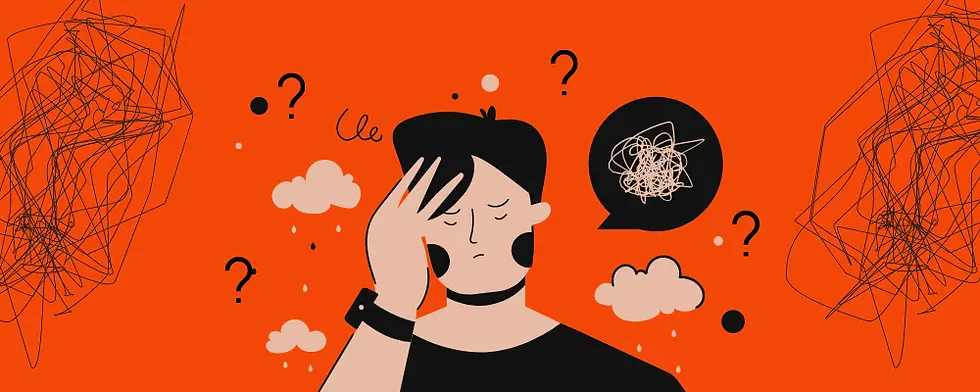
What this phrase was likely meant to convey is that we can learn to work with our emotions, not against them.
And by the end of this blog, I hope that idea begins to settle better with you.
Before we get to that, I can’t help but wonder—how did this misunderstanding even come to be?
If we really think about it, as kids we were often told, “There’s nothing to be upset about,” or the complete opposite “What’s there to be happy about?” Most of us were rarely given leeway to simply feel what demands to be felt.
So, instead most of us who are well-functioning adults simply did so by learning how to behave, what the “right” intensity of the feeling should look like in any given moment, how to tone it down, move on, or let it go.
Anything but actually sit with our emotions.
But here’s the thing–if we never felt safe enough to express and feel our emotions, how can we learn its language and understand what it's trying to tell us?
The guilt you experience when you make a mistake or unintentionally hurt someone, or the sadness when you lose someone you care about, are quite telling of where we need to bring that openness.
These emotions are the signpost that’s meant to nudge us towards what feels safe, what feels right, and what still needs our attention.

Most research around emotions and vulnerability, talk about its role in building more authentic relationships with others and ourselves, and even foster personal growth. It also builds on the theory that it's only through acknowledging and accepting our vulnerability and emotions, that we eventually learn how to process and navigate through them.
Neuroscience around why naming emotions are important
Naming what you feel often activates the region of the brain that acts as the Headquarters of Emotional Management, responsible for rational thinking and gaining layers of perspective when intense emotions surface.
This in turn decreases activity in the amygdala (the Break glass in case of an emergency alarm of our brain), often responsible for detecting potential threats and triggering emotional responses.
So, to put it simply, starting with naming the emotion you resonate with, can turn down the volume of this alarm, thus reducing the intensity of these emotional experiences.
Once the volume is turned down, different parts of our brain collaboratively help us observe these passing emotions instead of being overwhelmed by them.
Now, all this sounds great in theory, but how do we actually begin acknowledging our emotions and accepting them?
Picture this, you are at a party, it is quite loud and at times even over-stimulating.
Emotions can often feel this way, loud, unabashed, and incomprehensible. At the party, to make sense of a conversation, you will instinctively zero-in on their voice. Acknowledging our emotions begins the same way, ie by naming them, then zeroing in gradually. It also often helps act as an anchor to prevent that spiral.
At such a point, we can either stay stuck in this spiral or put a stop to it. You pause, acknowledge how these thoughts/feelings may be spiralling, and finally its impact on you, both emotionally and somatically.
Now, don’t get me wrong, it is not easy to actually state what emotion is coming up for us in that moment, especially when most of us are not in the state to go back to our repertoire of vocabulary when doing so. It is also often limited to the emotions that are visible outwardly, like sad, mad, angry, happy, surprised, stressed, or tired. But emotions are rarely that straightforward.
Research shows that the more attention we give to the act of naming an emotion, the more regulating it becomes. We can also avoid the emotion taking us by surprise, as we begin assimilating it to similar future instances.
Think of it as finally learning how to blend colours as you transition through them on a colouring book.
Now that you have some context about why naming emotions matters, how about we turn this awareness into something practical? Here’s a short exercise you can try anytime your feelings feel tangled or unclear:
Step 1: Pause and Acknowledge: Pause for a moment and ask yourself “What am I feeling right now?”
Notice any thoughts, or changes in the body or any physical sensations, any heaviness you feel within, where it stays, or maybe even if it is making your heart race?
Step 2: Using the emotion sensation wheel These wheels are easily accessible online, under the same name. You can start from the most core, familiar emotion (on the outermost concentric circle) and then let it gradually draw you inwards towards the primary emotion you resonate with.
Step 3: Label with Kindness and ValidationSimply name it without any judgement, “I’m noticing that I am feeling ______” or
“A part of me is feeling _____” while you observe them from this distance. Saying them out loud helps a lot more than ruminating over them in your head.
Step 4: Use Grounding/Regulating skills Let these feelings stay while you simply try to focus on your breathing. You can also read up on abdominal breathing for the same.
Learning the language of emotions takes patience. It's not about getting it "right" every time, its about staying in the present with it. Some days, naming what you feel will come easily while on others, it may feel impossible.
What matters is curiosity and compassion in the way you show up for your emotions.
When you begin to truly listen to your emotions, they stop feeling like something to control and start becoming something to understand.
Looking forward to your insights in the comments below :)



Comments